Customs Intelligence

Customs Intelligence

Practical analysis for licensed customs brokers — HTS classification, CBP rulings, compliance risk, duty recovery, and the regulatory changes that affect your practice.

LatestHTS ClassificationFestive Articles

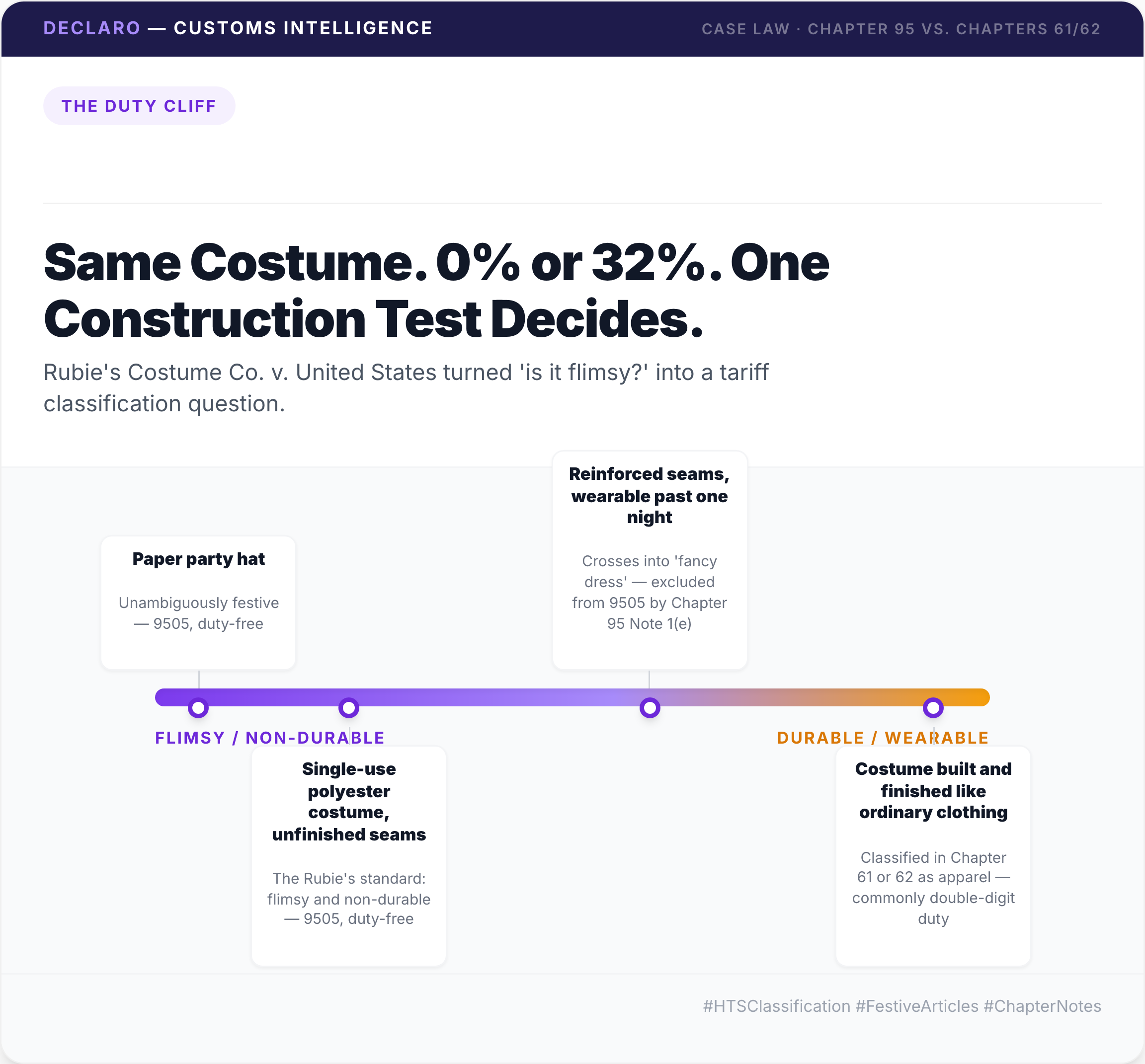
Why a Flimsy Halloween Costume Pays 0% Duty and a Well-Made One Pays 32%

One chapter note and one Federal Circuit case turned 'how well is this stitched?' into a tariff classification question — and it's still the rule CBP applies today. A real duty cliff hiding inside a product category most importers never think twice about.

D
Declaro · Jul 10, 2026 · 3 min read
All Posts

21 articles
Duty StackingSection 3013 min read

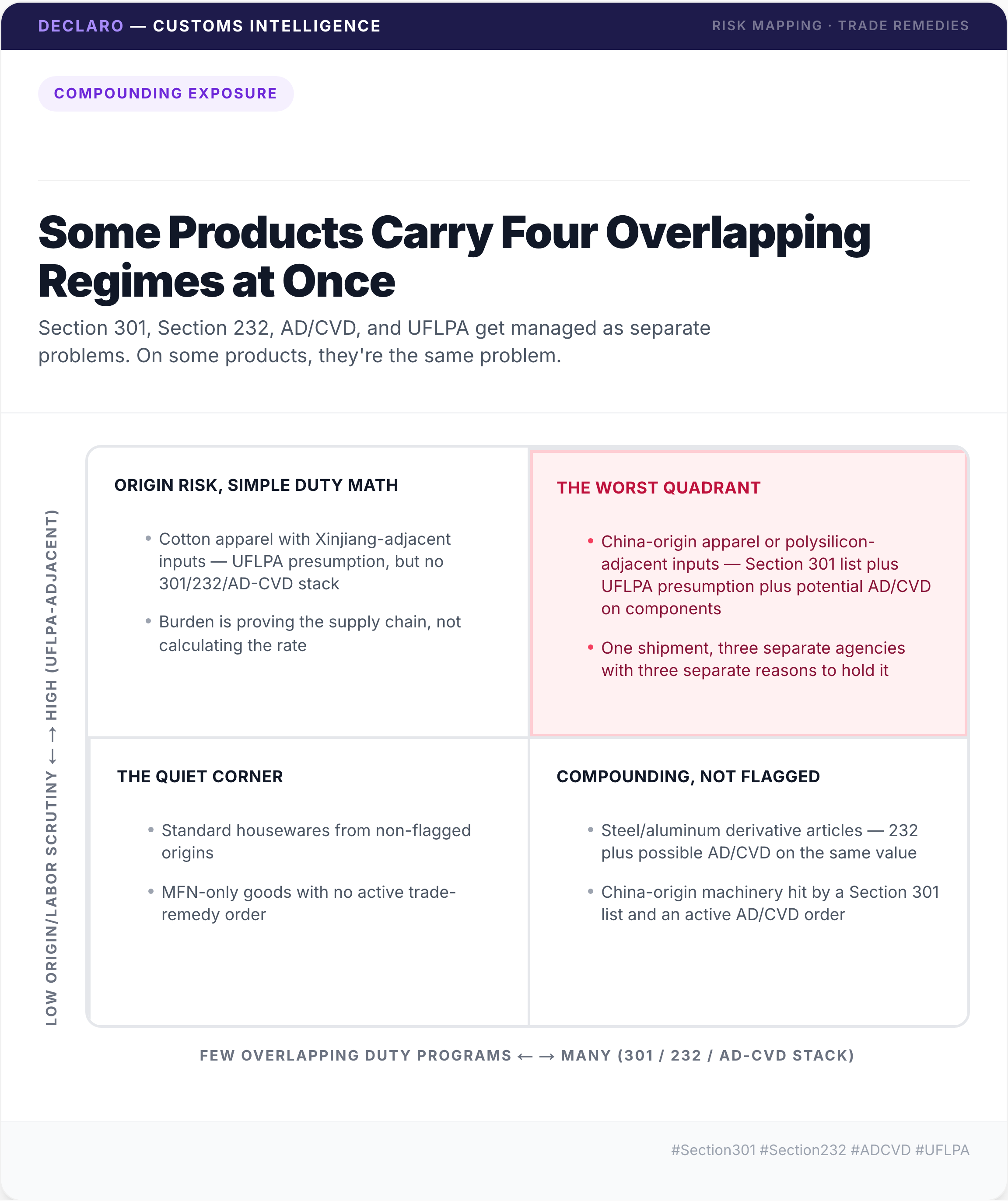
Some Products Carry Four Overlapping Tariff Regimes at Once. Here's How to Spot Them.

Section 301, Section 232, AD/CVD, and UFLPA each get managed as a separate compliance problem. On some products, they're not separate at all — they're the same shipment, watched by three different agencies for three different reasons.

D
Declaro · Jul 10, 2026
HTS ClassificationQuick Reference2 min read

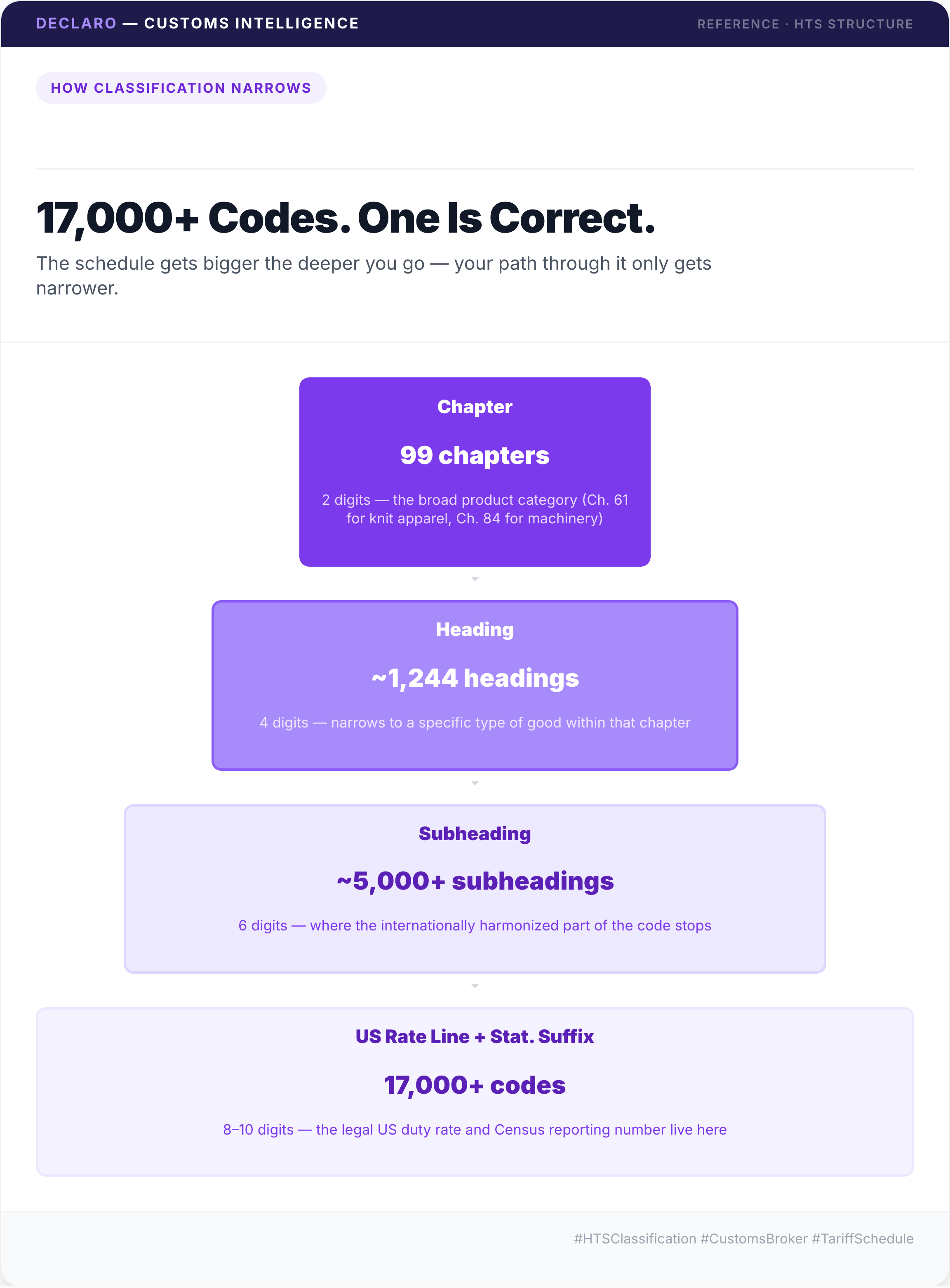
17,000 HTS Codes. One Is Correct. Here's How You Actually Get There.

Classification isn't a lookup — it's an elimination process governed by the General Rules of Interpretation. A quick-reference breakdown of how the schedule narrows from 99 chapters to your one correct code, and why the total code count grows the deeper you go.

D
Declaro · Jul 8, 2026
Section 301Section 2322 min read

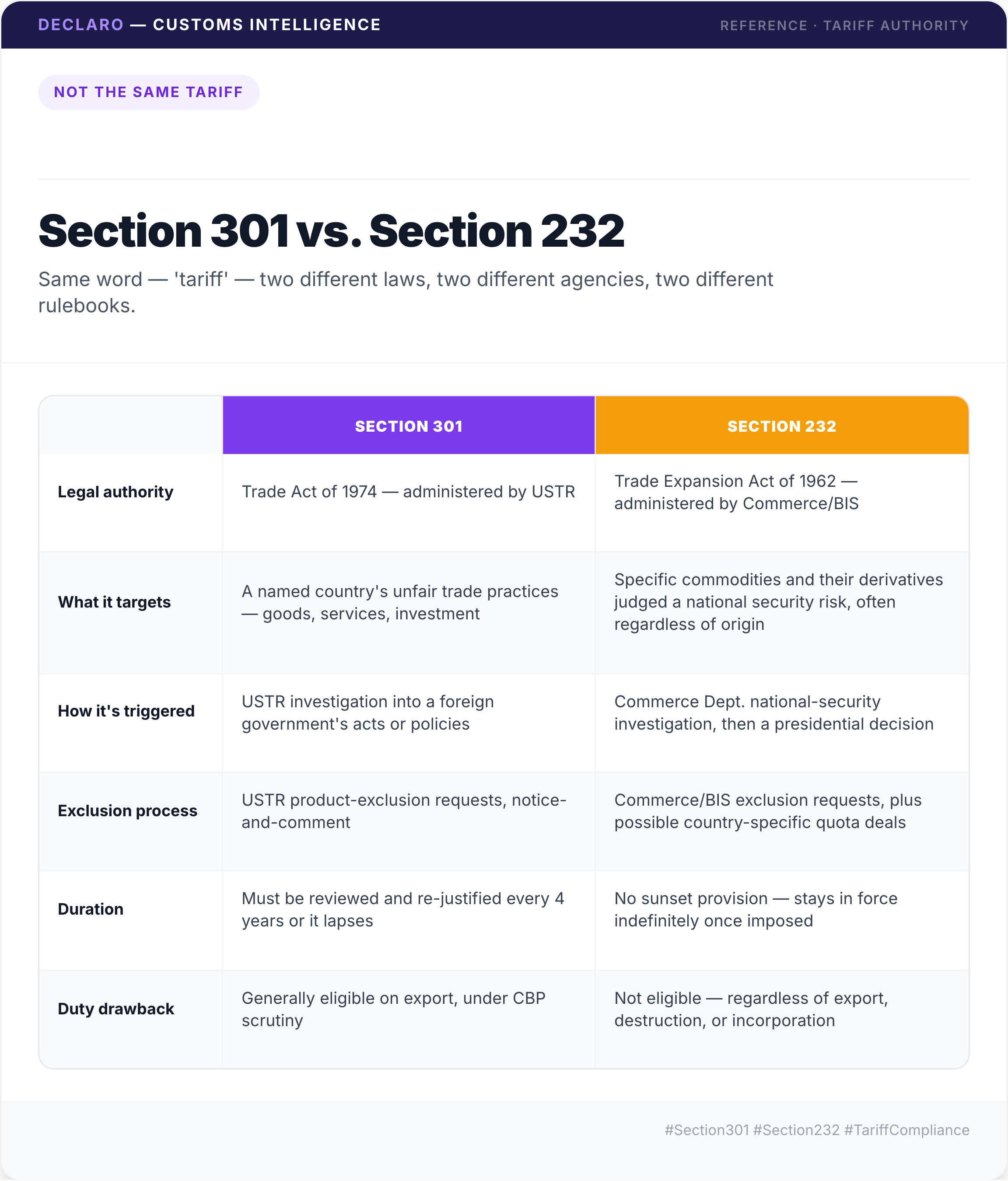
Section 301 vs. Section 232: You're Not Fighting the Same Tariff

Both get called 'tariffs' in the same breath, but they come from different laws, different agencies, and different rulebooks — including one difference that determines whether you can ever get the duty back.

D
Declaro · Jul 8, 2026
Customs HoldDemurrage2 min read

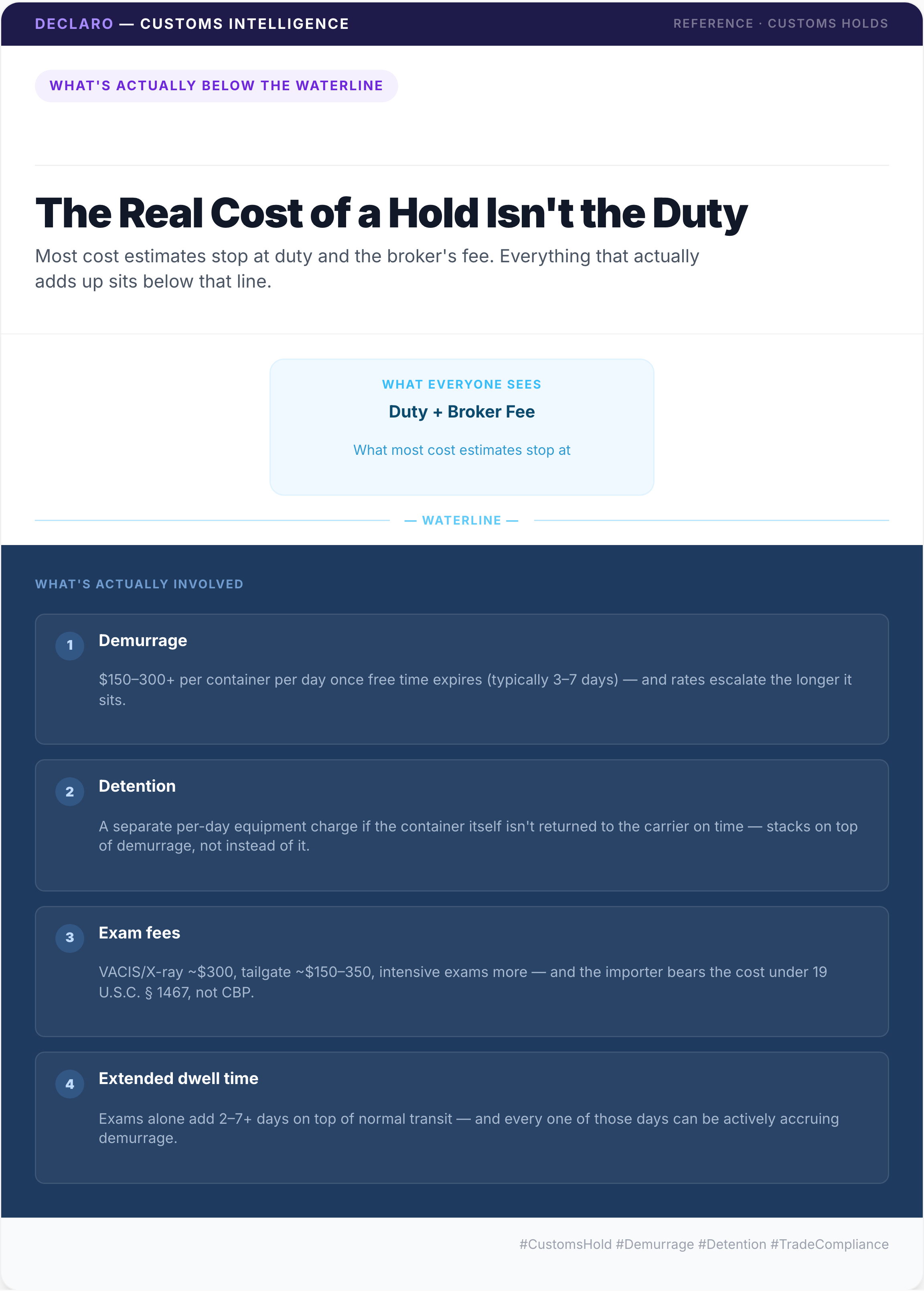
The Real Cost of a Customs Hold Isn't the Duty

Most landed cost estimates stop at duty and the broker's filing fee. That's the visible part. Demurrage, detention, exam fees, and the extra dwell time an exam adds sit below the waterline — and by law, the importer pays for all of it. Here's what actually accumulates once a shipment gets held, and why proactive classification is the cheaper problem to have.

D
Declaro · Jul 7, 2026
Duty StackingSection 3012 min read

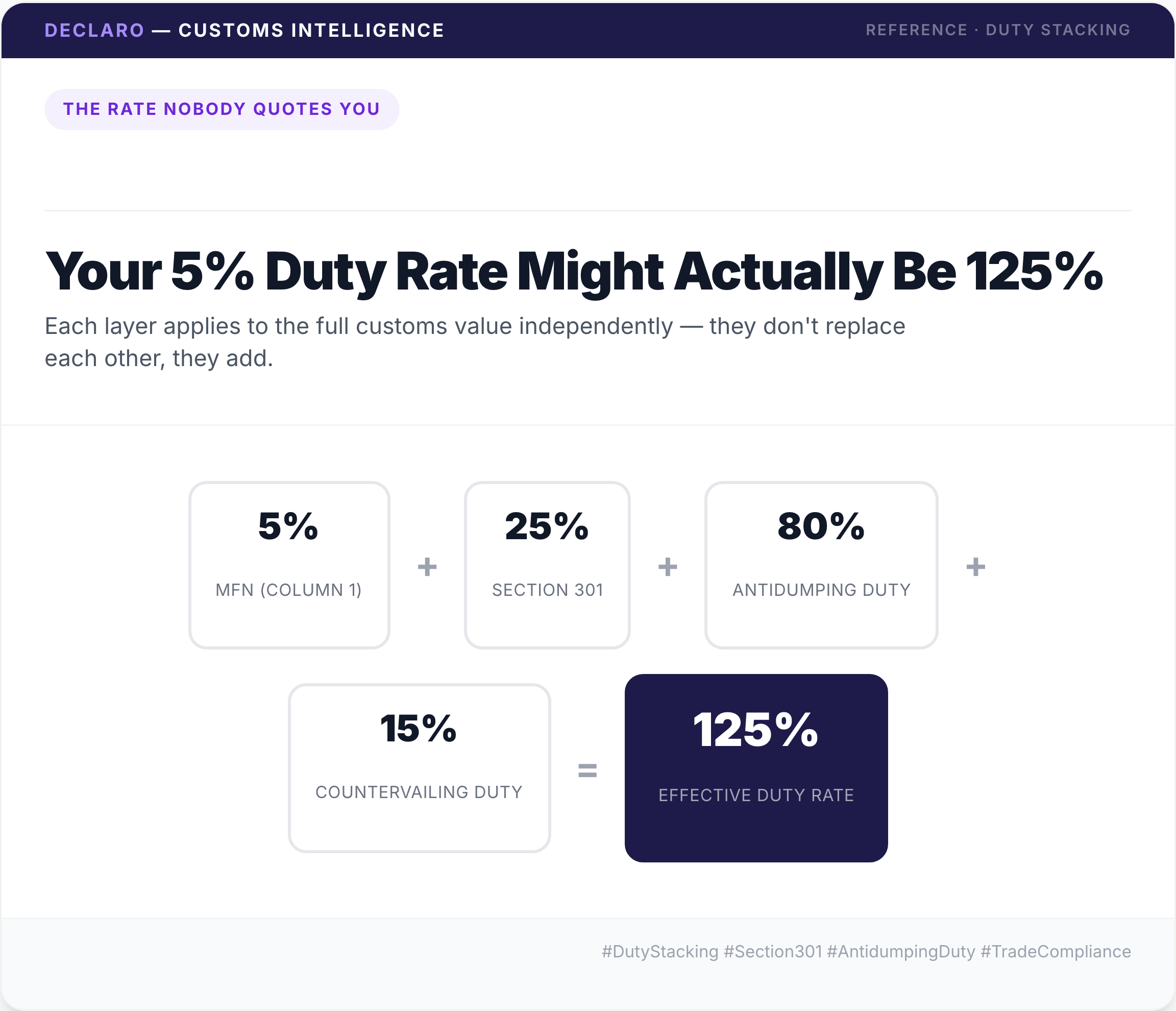
Your 5% Duty Rate Might Actually Be 125%

Most landed cost estimates start and end with the MFN duty rate on a tariff schedule. For a growing share of imports, that number isn't the real cost — Section 301, antidumping, and countervailing duties all apply to the same customs value independently, and they stack. Here's a worked example showing exactly how a $50,000 shipment becomes $112,736.

D
Declaro · Jul 7, 2026
De MinimisSection 3212 min read

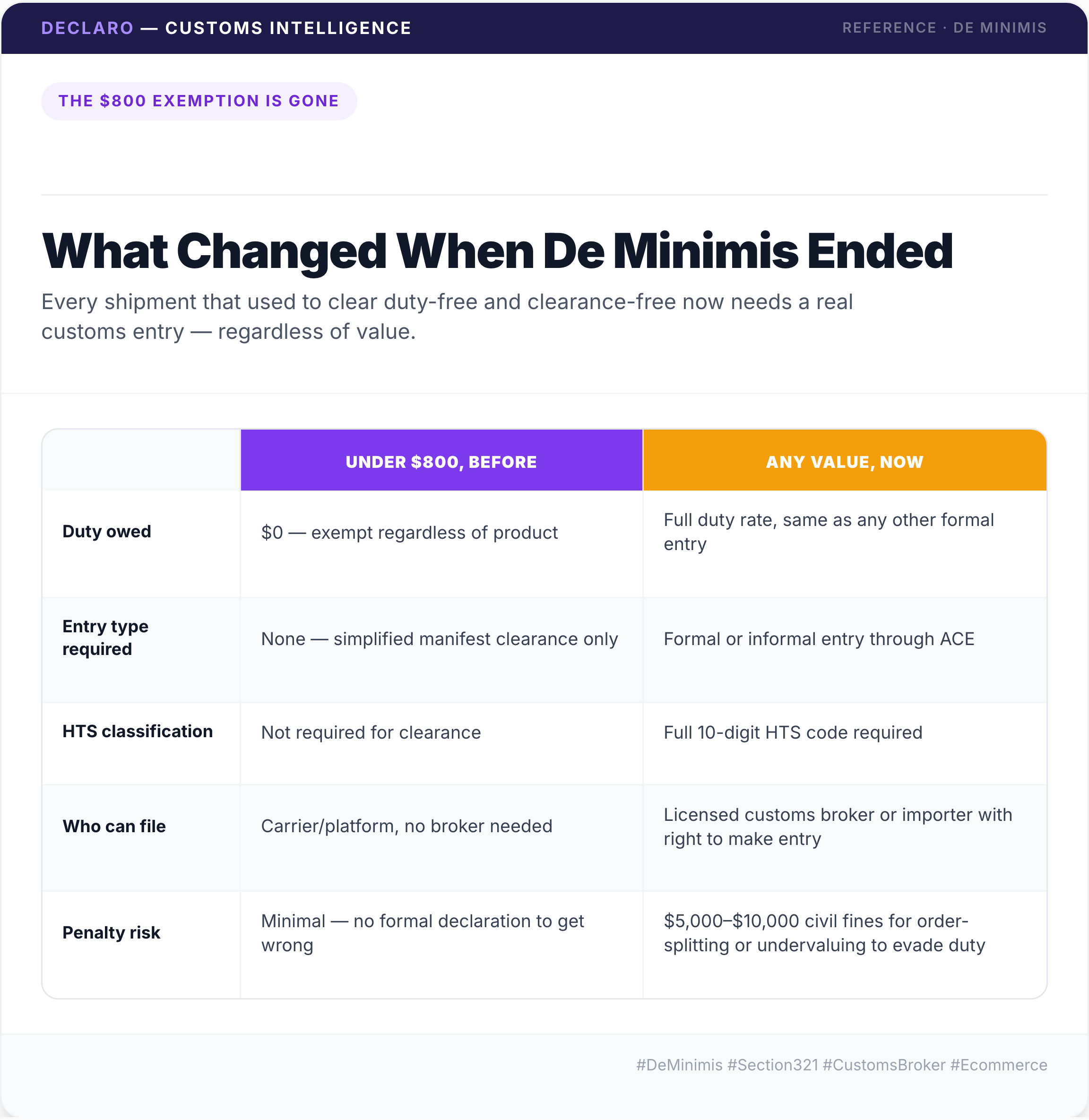
De Minimis Is Over. Here's What Actually Changed.

The $800 duty-free exemption that let roughly 4 million packages a day clear with no formal entry is gone — suspended in stages from a China-specific carve-out to an indefinite, worldwide rule in about fourteen months. Here's exactly what's now required, and why the timeline matters as much as the rule itself.

D
Declaro · Jul 6, 2026
UFLPAForced Labor3 min read

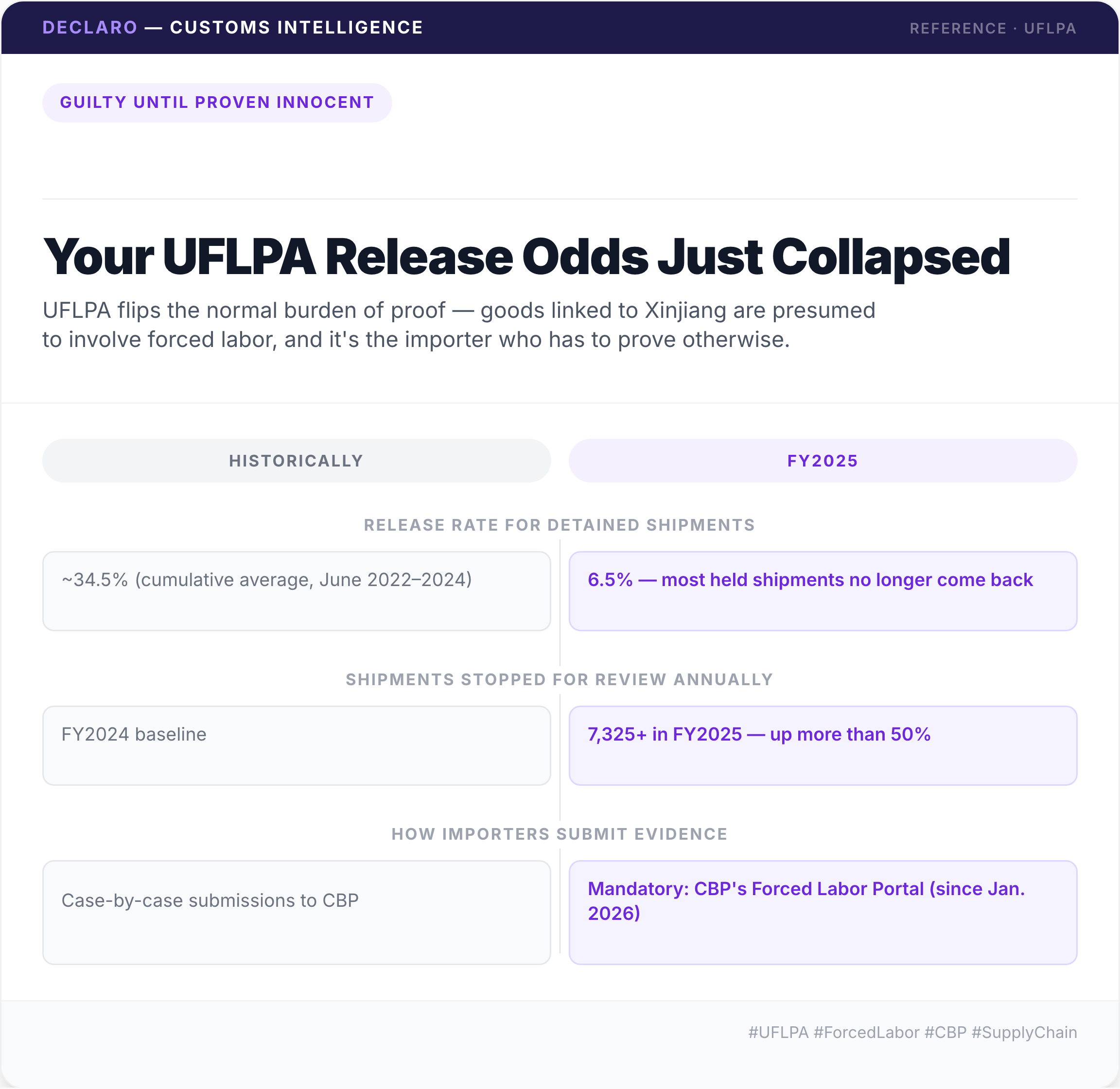
Your UFLPA Shipment Is Guilty Until You Prove Otherwise

UFLPA flips the normal burden of proof: goods linked to Xinjiang are presumed to involve forced labor, and it's the importer who has to prove otherwise with 'clear and convincing evidence.' The release rate for detained shipments has collapsed to 6.5% in FY2025 — here's what actually overcomes the presumption, and why waiting until detention to build the case is the expensive way to learn the standard.

D
Declaro · Jul 6, 2026
AD/CVDAntidumping2 min read

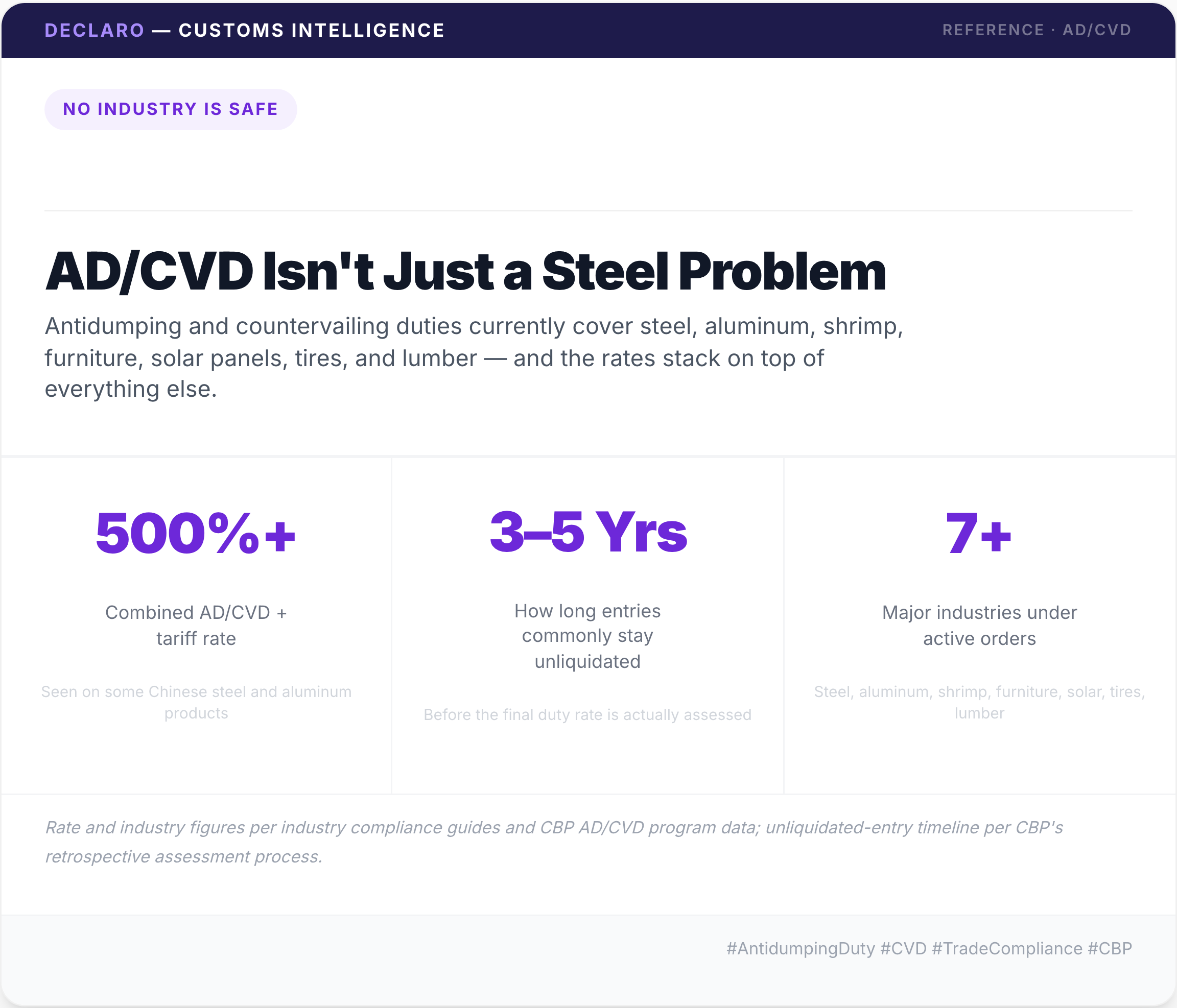
Your AD/CVD Deposit Isn't Your Final Bill

Antidumping and countervailing duties aren't a steel-and-solar-panel niche — they currently cover shrimp, furniture, tires, and lumber too, with combined rates that can exceed 500%. Here's the part that catches even careful importers off guard: what you pay at entry isn't the final number.

D
Declaro · Jul 5, 2026
Importer of RecordReasonable Care3 min read

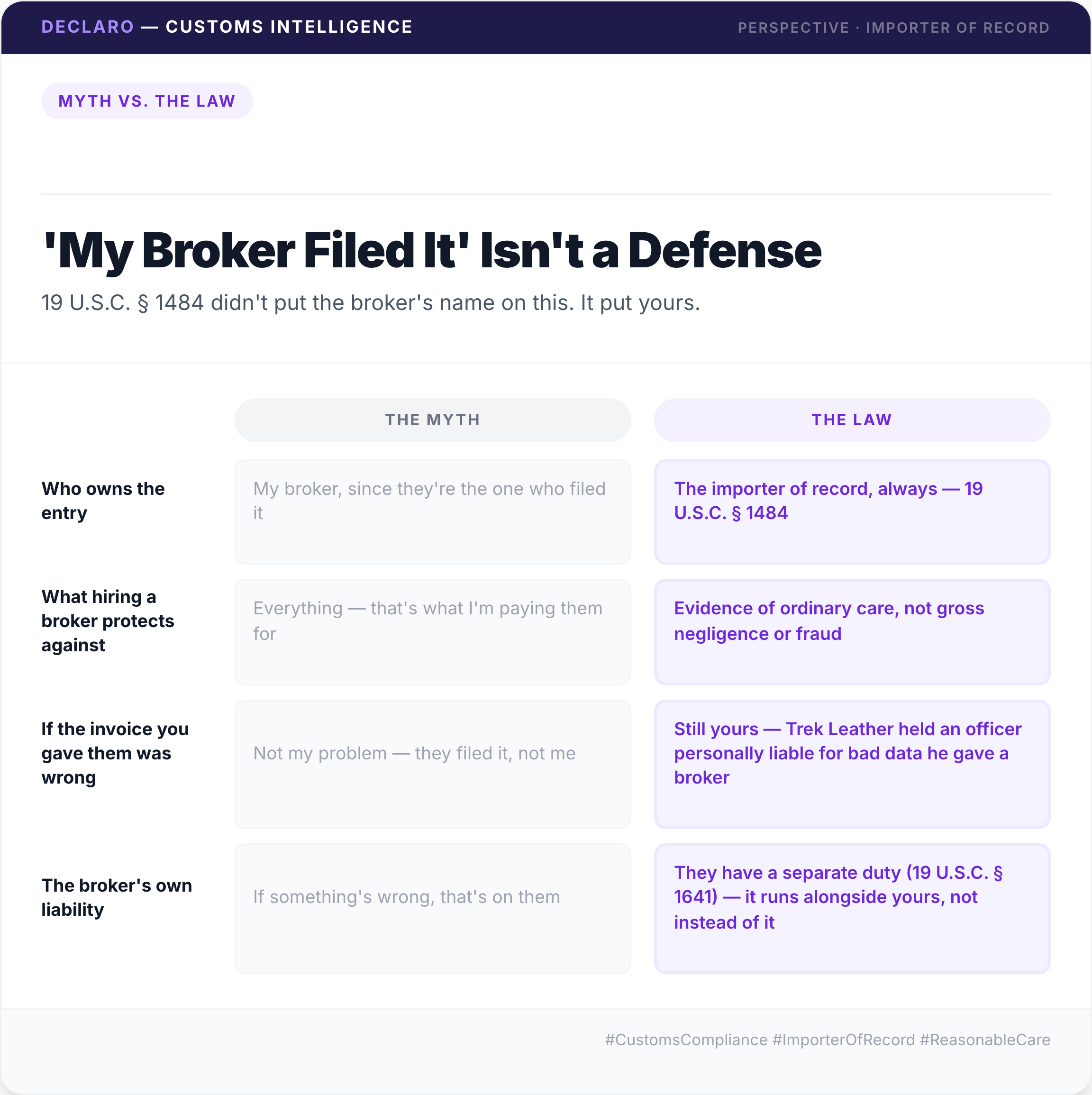
Your Broker Filed It. You're Still Liable.

One of the most common — and most expensive — misconceptions in customs compliance: that hiring a broker transfers your compliance responsibility. It doesn't. Here's what the law actually says, and what a real Federal Circuit case says about who pays when it goes wrong.

D
Declaro · Jul 5, 2026
Trade ComplianceSupply Chain Strategy3 min read

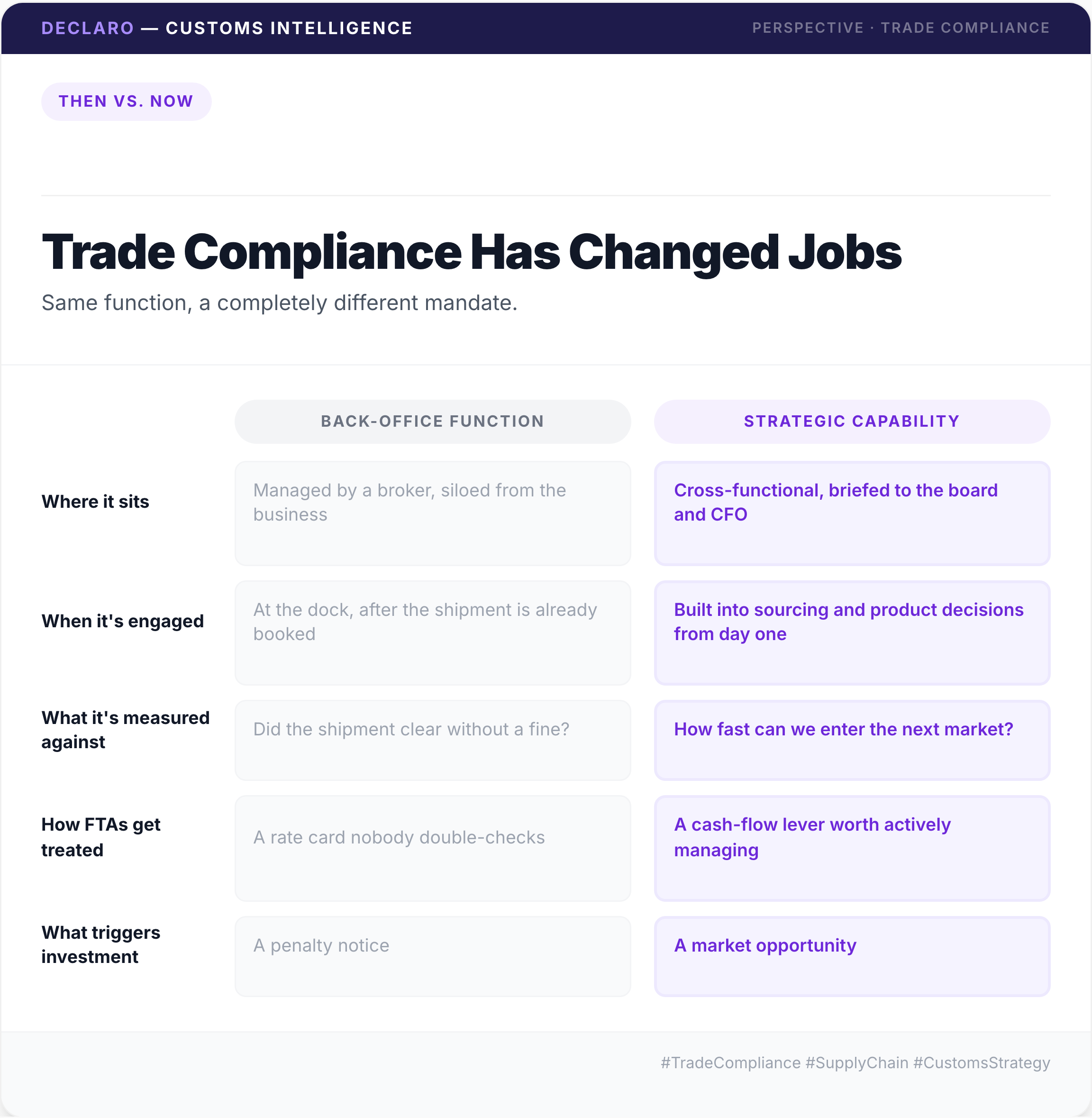
Trade Compliance Isn't a Cost Center Anymore — It's a Competitive Advantage

For years, trade compliance was a back-office function managed by a broker to keep shipments moving. That's changed. Here's what the data says about why compliance now shapes market access, cash flow, and how fast a company can enter a new market.

D
Declaro · Jul 3, 2026
IEEPACAPE3 min read

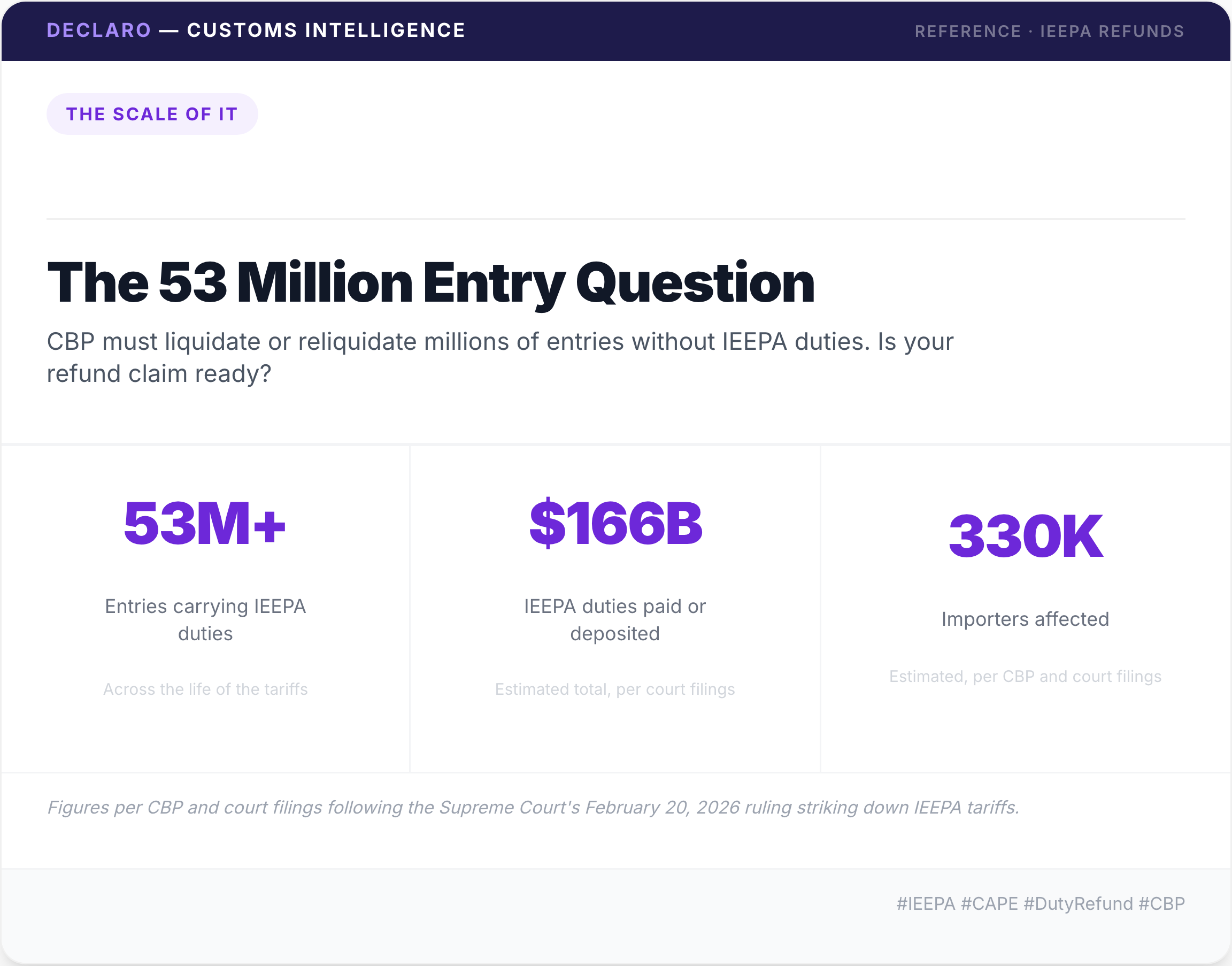
IEEPA Refunds and CAPE: The 53 Million Entry Question

After the Supreme Court struck down the IEEPA tariffs, CBP was ordered to liquidate or reliquidate millions of entries without them. Here's how the CAPE refund process actually works, what you need before you file, and what delays a claim.

D
Declaro · Jul 3, 2026
Client IntakeEntry Filing3 min read

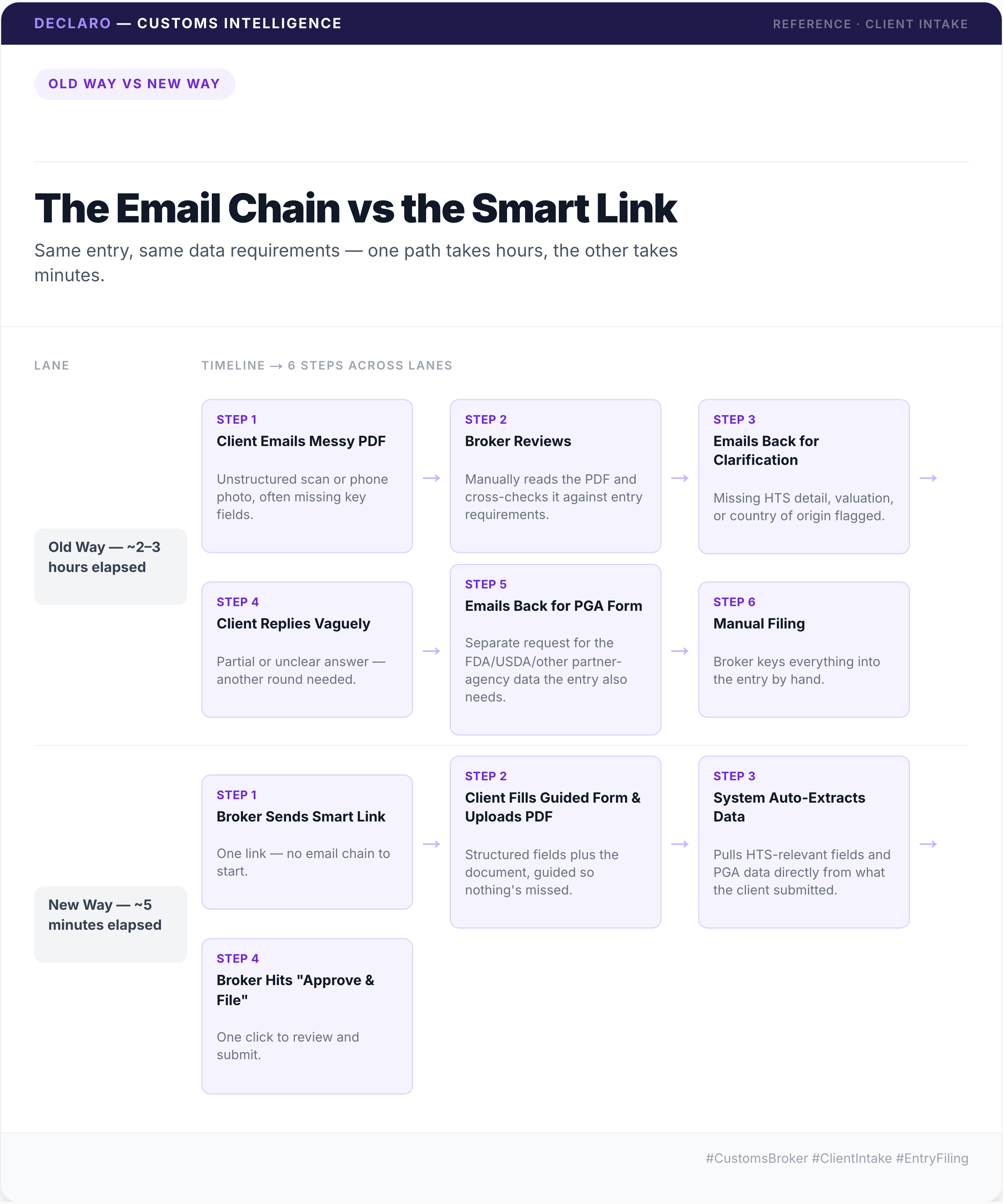
The Client Intake Process That Turns 3 Hours Into 5 Minutes

The slowest part of filing an entry usually isn't the classification — it's the email chain before it. Here's what changes when a messy PDF and a guided form are compared step for step.

D
Declaro · Jul 3, 2026
Customs ComplianceFirst Sale4 min read

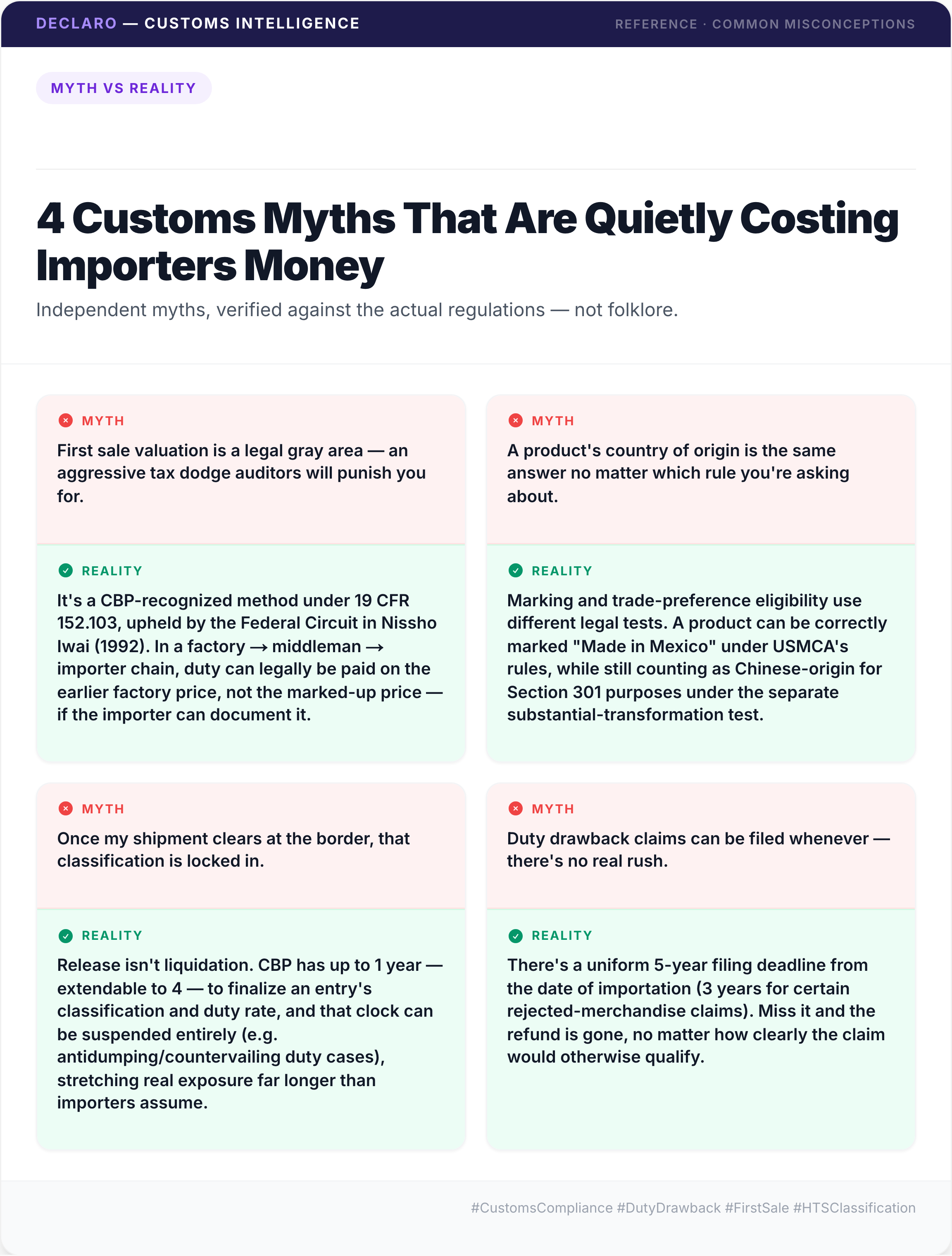
4 Customs Myths That Are Quietly Costing Importers Money

Some of the most confidently repeated 'facts' in customs compliance are wrong — and the gap between what people believe and what the regulations actually say is where real money gets left on the table, or real penalties get triggered.

D
Declaro · Jul 3, 2026
Focused AssessmentPrior Disclosure5 min read

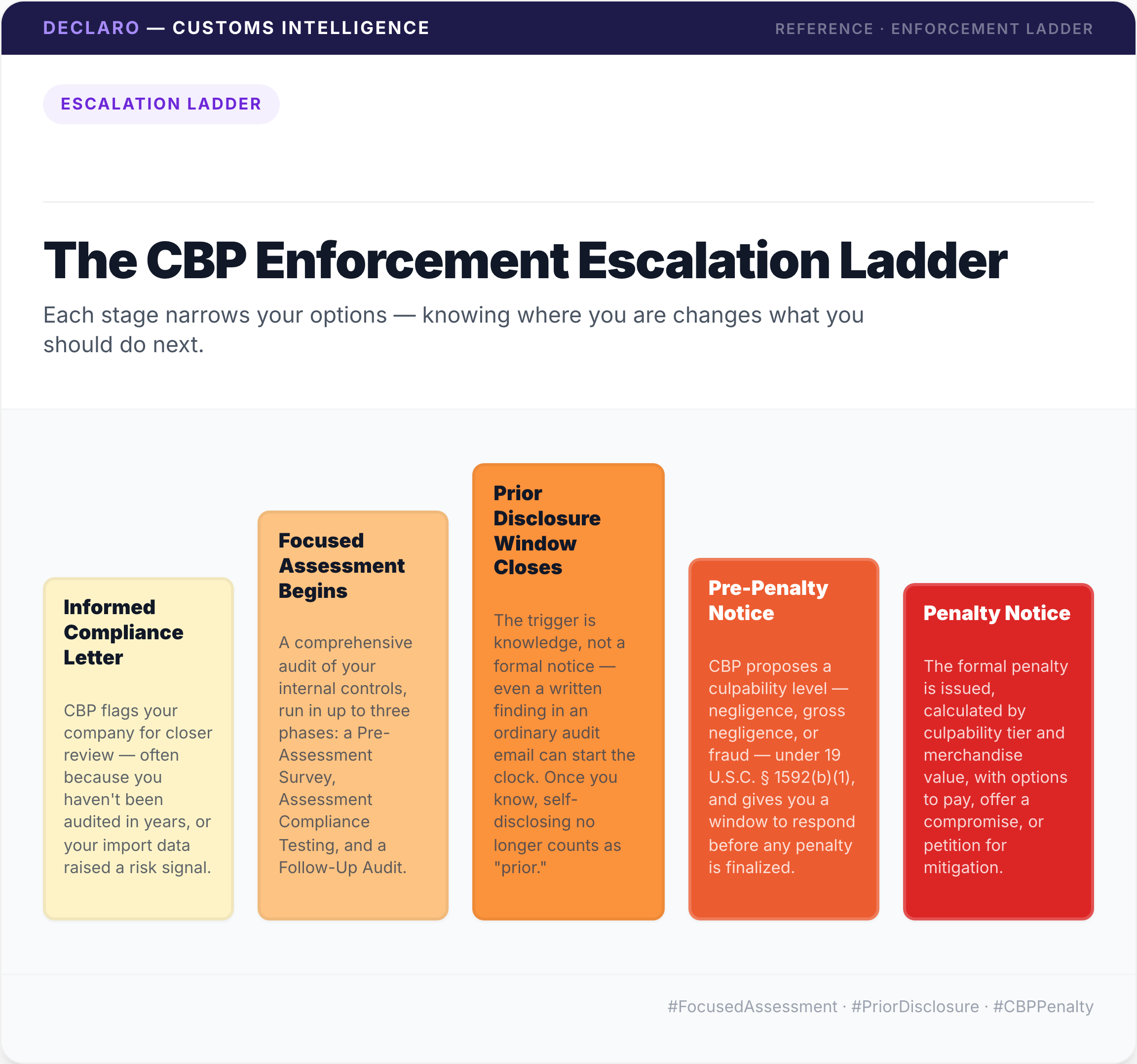
The CBP Enforcement Escalation Ladder: What Happens After an Informed Compliance Letter

An Informed Compliance Letter isn't routine mail — it's the first rung on a ladder that ends in a penalty notice. Here's every stage in between, and where your options actually narrow.

D
Declaro · Jul 2, 2026
Binding RulingsCROSS4 min read

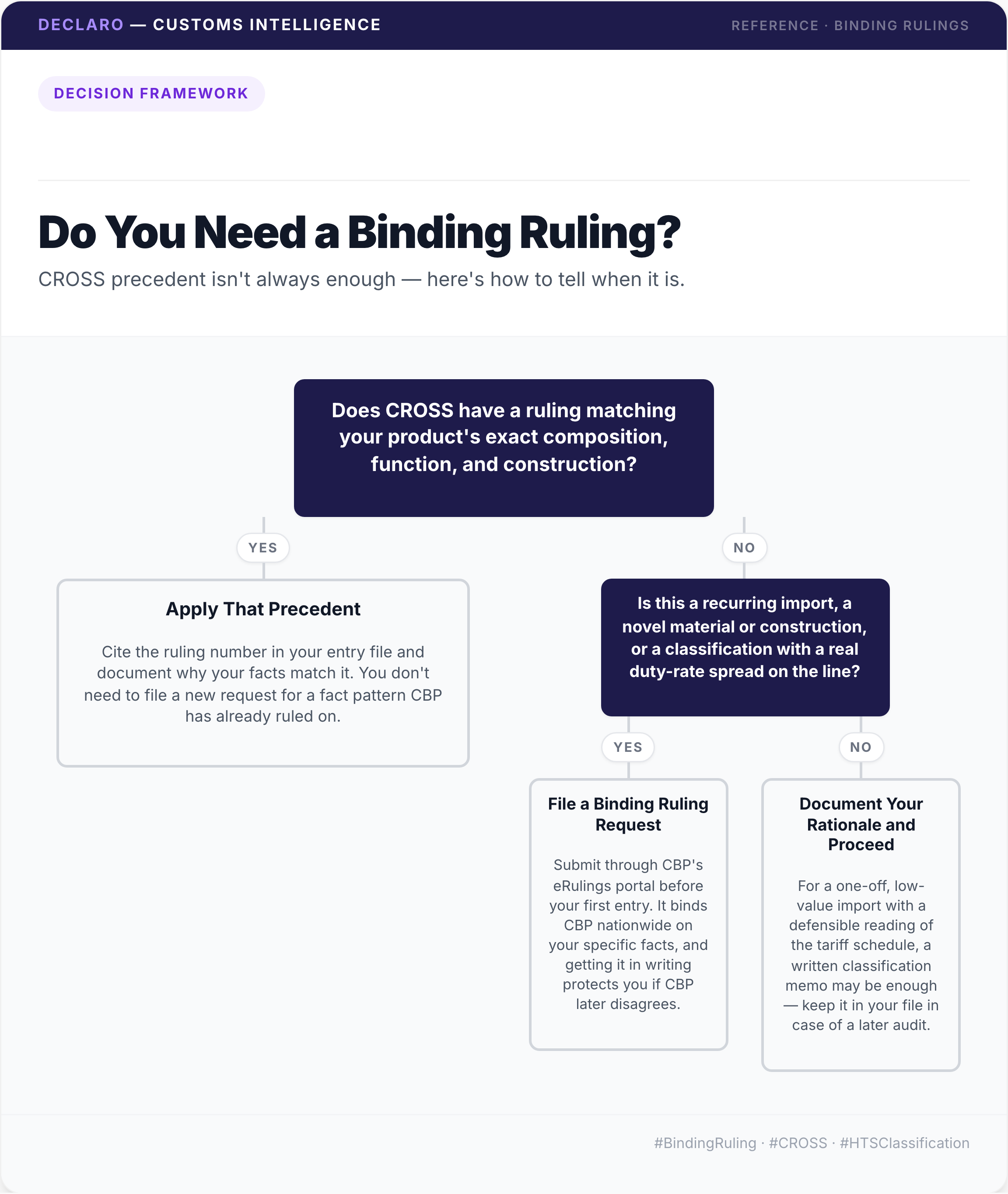
Do You Need a Binding Ruling? A Decision Framework Before You File

CROSS has 220,000+ rulings, but precedent doesn't cover every fact pattern. A three-question framework for knowing when a search is enough, when to file, and when a documented rationale will do.

D
Declaro · Jul 1, 2026
HTS ClassificationQuick Reference1 min read

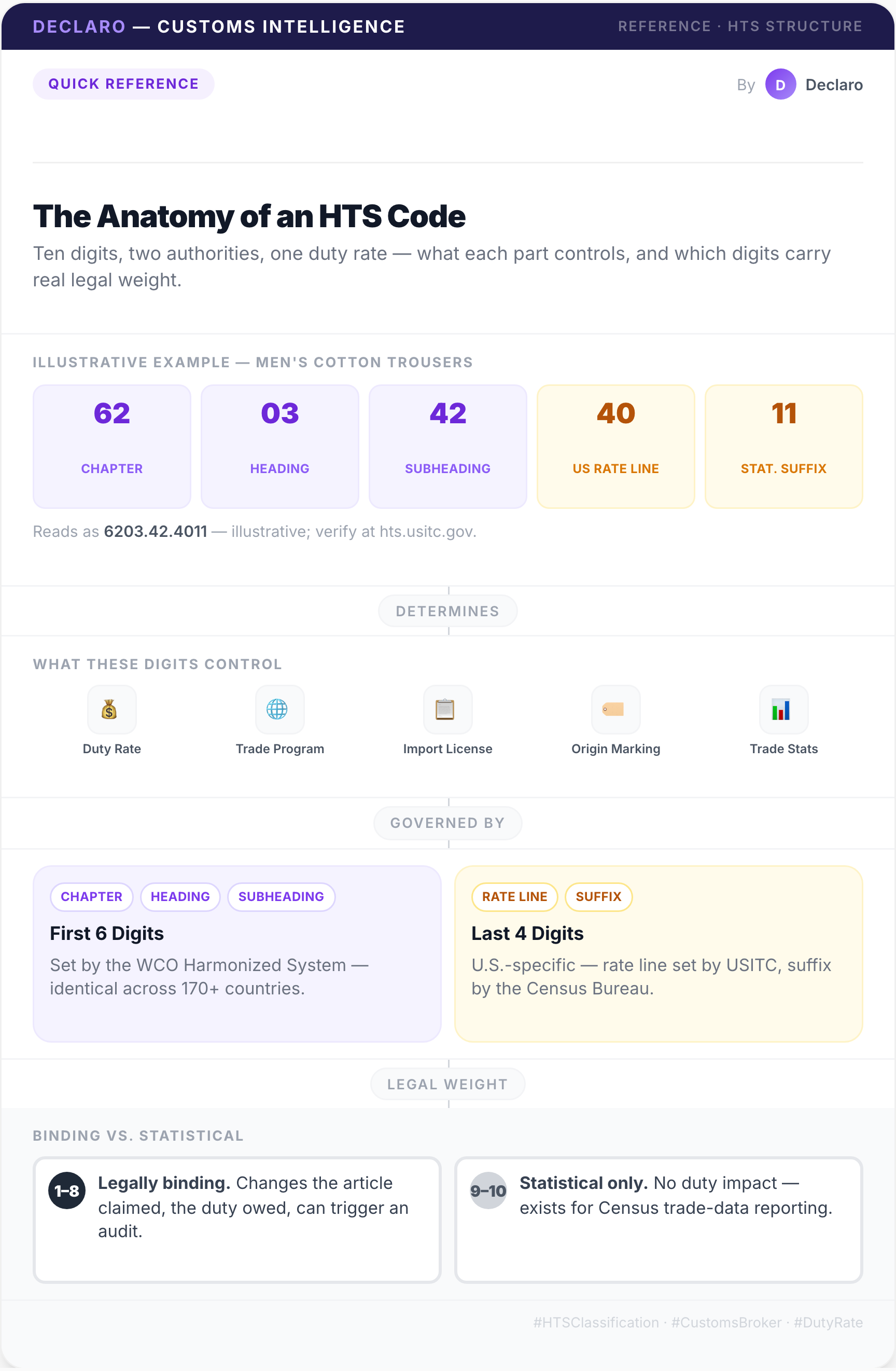
The Anatomy of an HTS Code

Ten digits, two authorities, one duty rate. A quick-reference breakdown of what each part of a classification actually controls — and which digits carry real legal weight.

D
Declaro · Jul 1, 2026
Reasonable CareQuick Reference1 min read

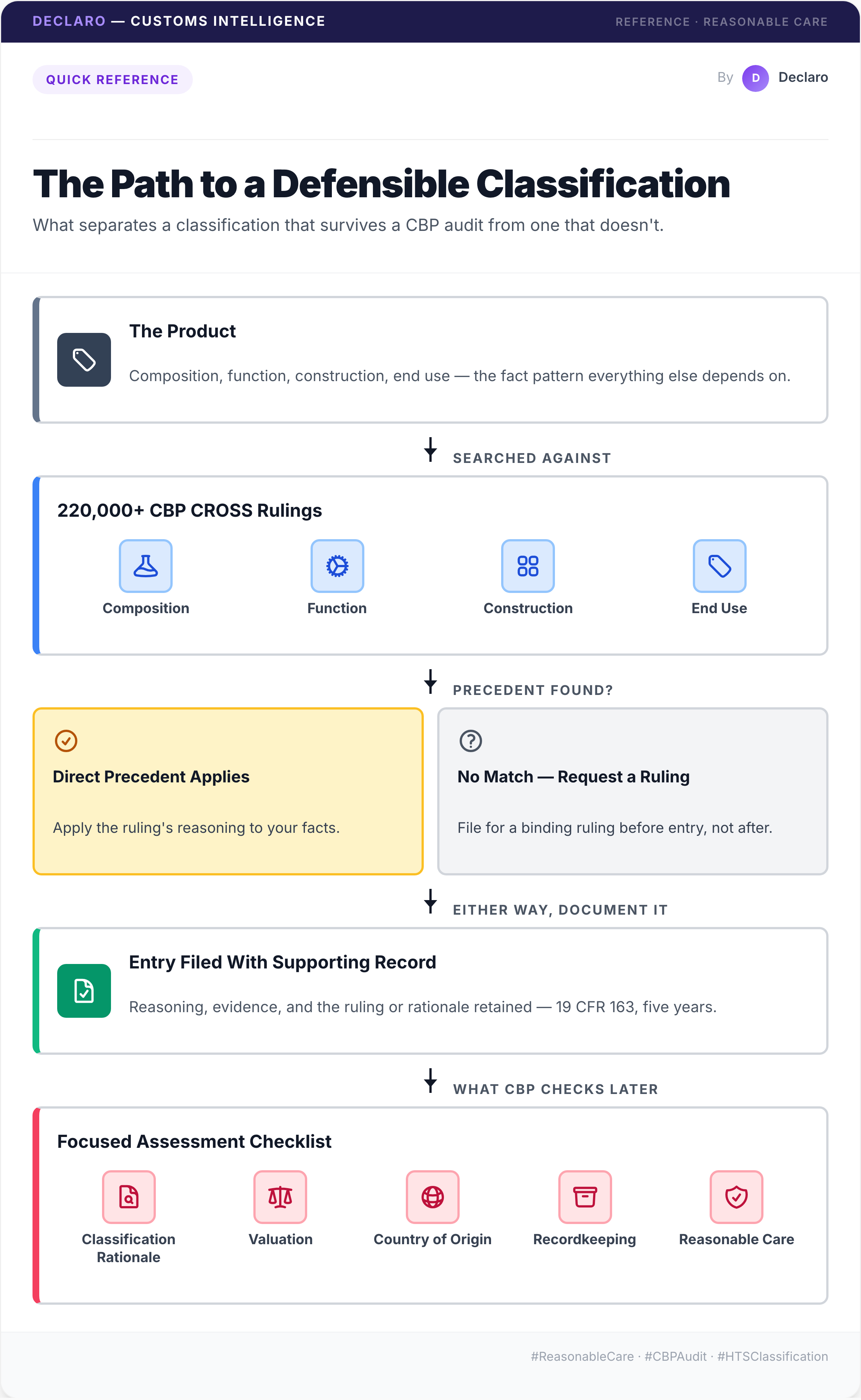
The Path to a Defensible Classification

What separates a classification that survives a CBP audit from one that doesn't — from product facts through precedent search to the record you keep.

D
Declaro · Jul 1, 2026
Real CBP RulingHTS Classification6 min read

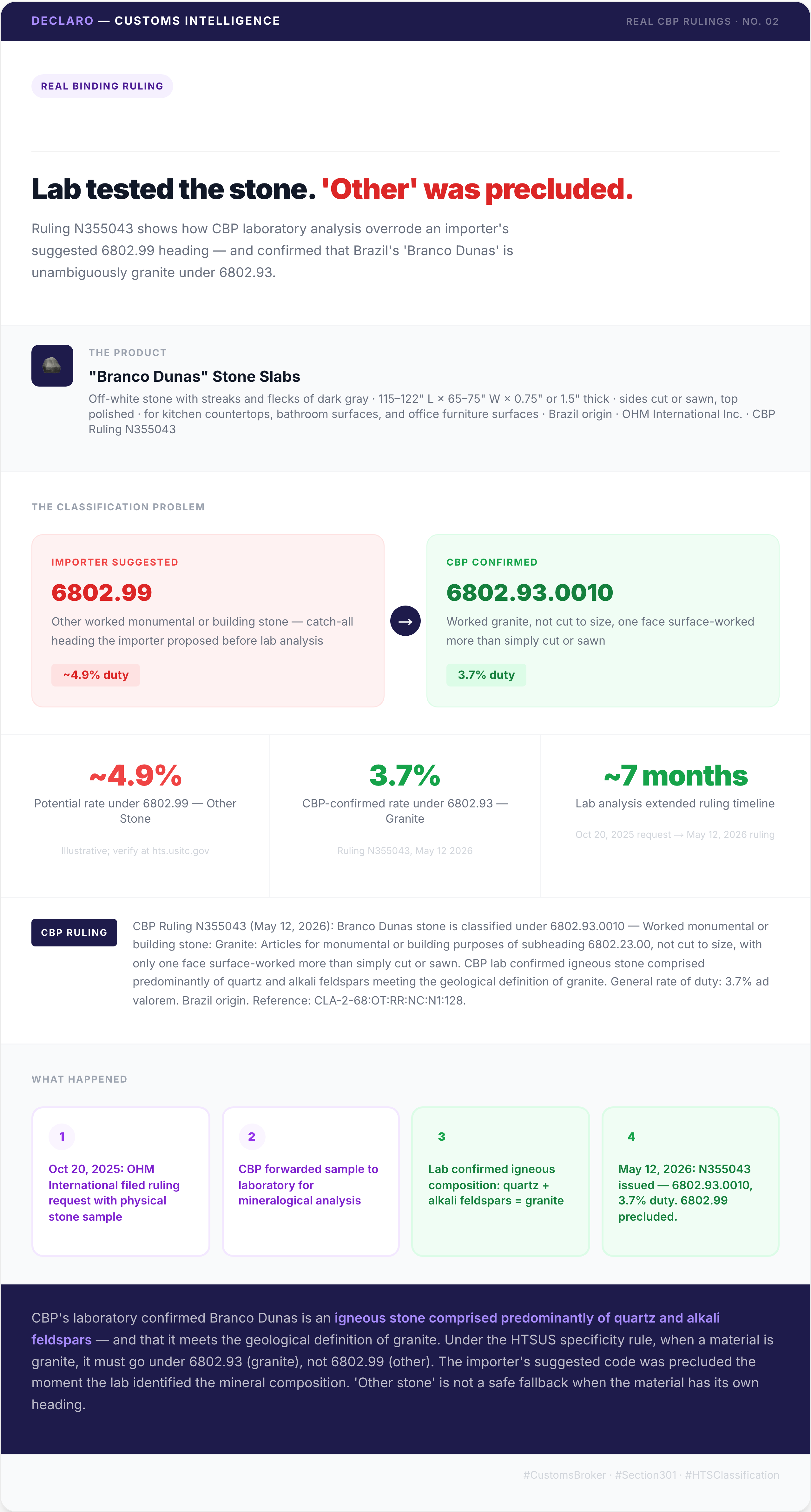
The Importer Said 'Other Stone.' CBP Lab Said Granite.

Ruling N355043 shows how mineralogical lab analysis overrode OHM International's suggested 6802.99 heading for Brazilian Branco Dunas slabs — and why 'other stone' is a dangerous fallback classification.

D
Declaro · Jun 30, 2026
Country of OriginSubstantial Transformation5 min read

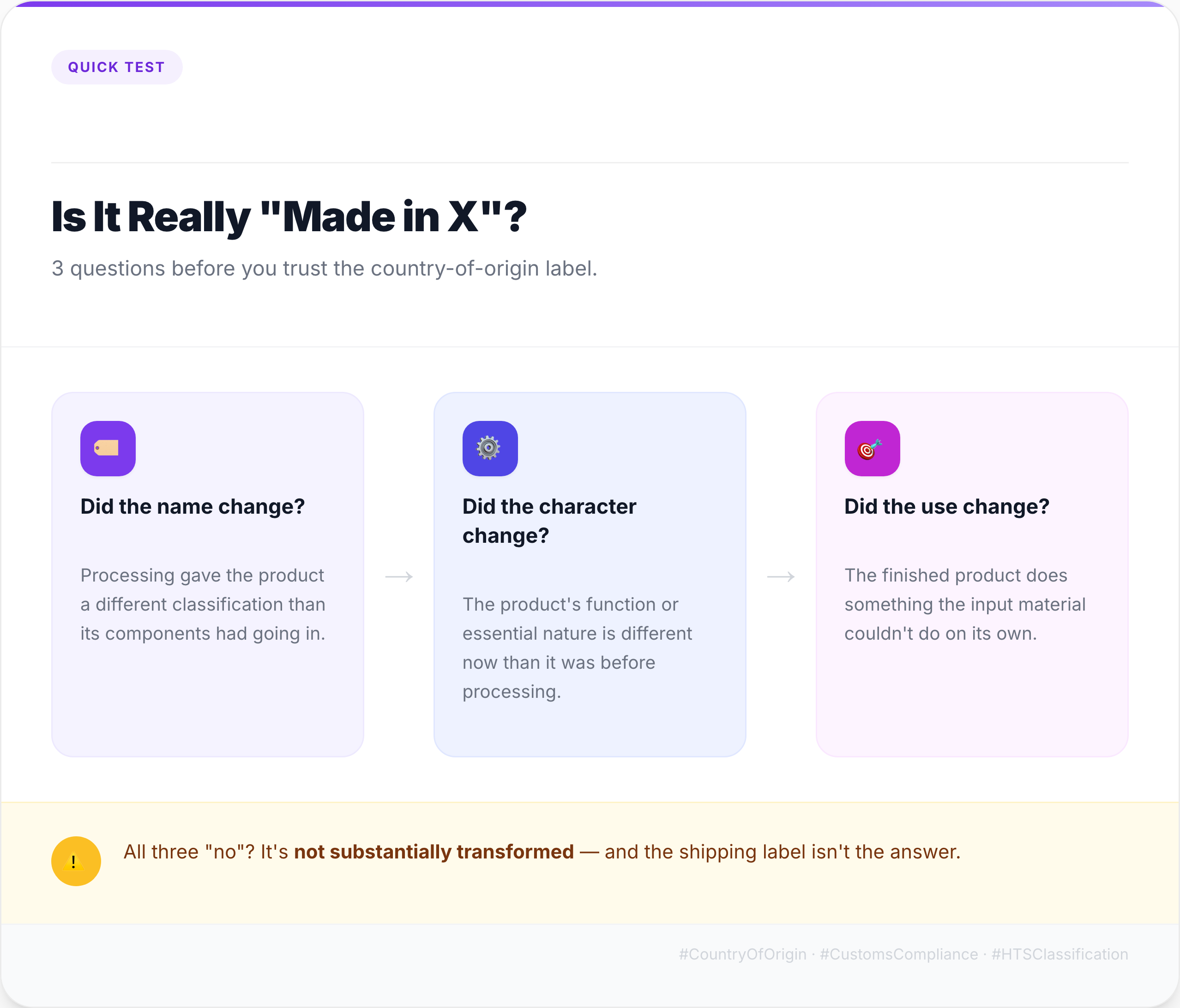
Is It Really 'Made in X'? The 3-Question Substantial Transformation Test

The question importers ask most: does my product actually qualify for the country of origin I'm claiming? Here's the name/character/use test CBP applies before anything gets case-specific.

D
Declaro · Jun 30, 2026
Real CBP RulingHTS Classification5 min read

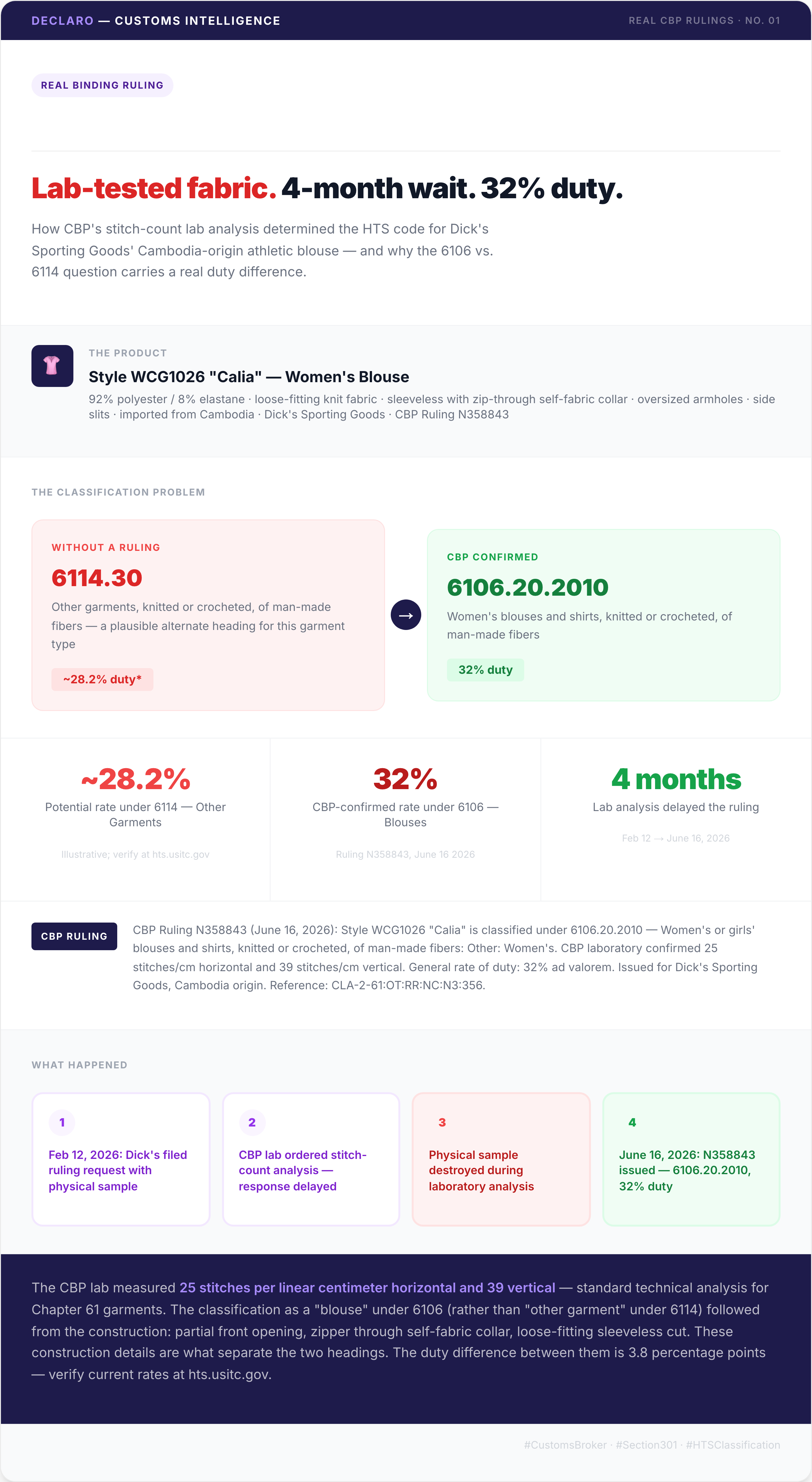
CBP Required Lab Analysis to Classify This Athletic Blouse. Here's What It Revealed.

Ruling N358843 shows how a stitch-count test determined the HTS code for Dick's Sporting Goods' 'Calia' blouse — and why the 6106 vs. 6114 question carries a real duty gap.

D
Declaro · Jun 29, 2026